Banner Blindness with AI — The Ghost of Corporate Memphis
A coworker had recently asked me if I’d noticed that a lot of advertising on social media, such as Instagram and Facebook, was AI-generated. I didn’t hesitate to confirm it; we discussed how similar all the ads look and how obvious it seems that they're AI-generated. We discussed that this overflow of AI-generated work will result in banner blindness – when audiences automatically ignore something because they recognize it to be an ad.
It reminded me of a design style that took over in 2017 – Corporate Memphis.
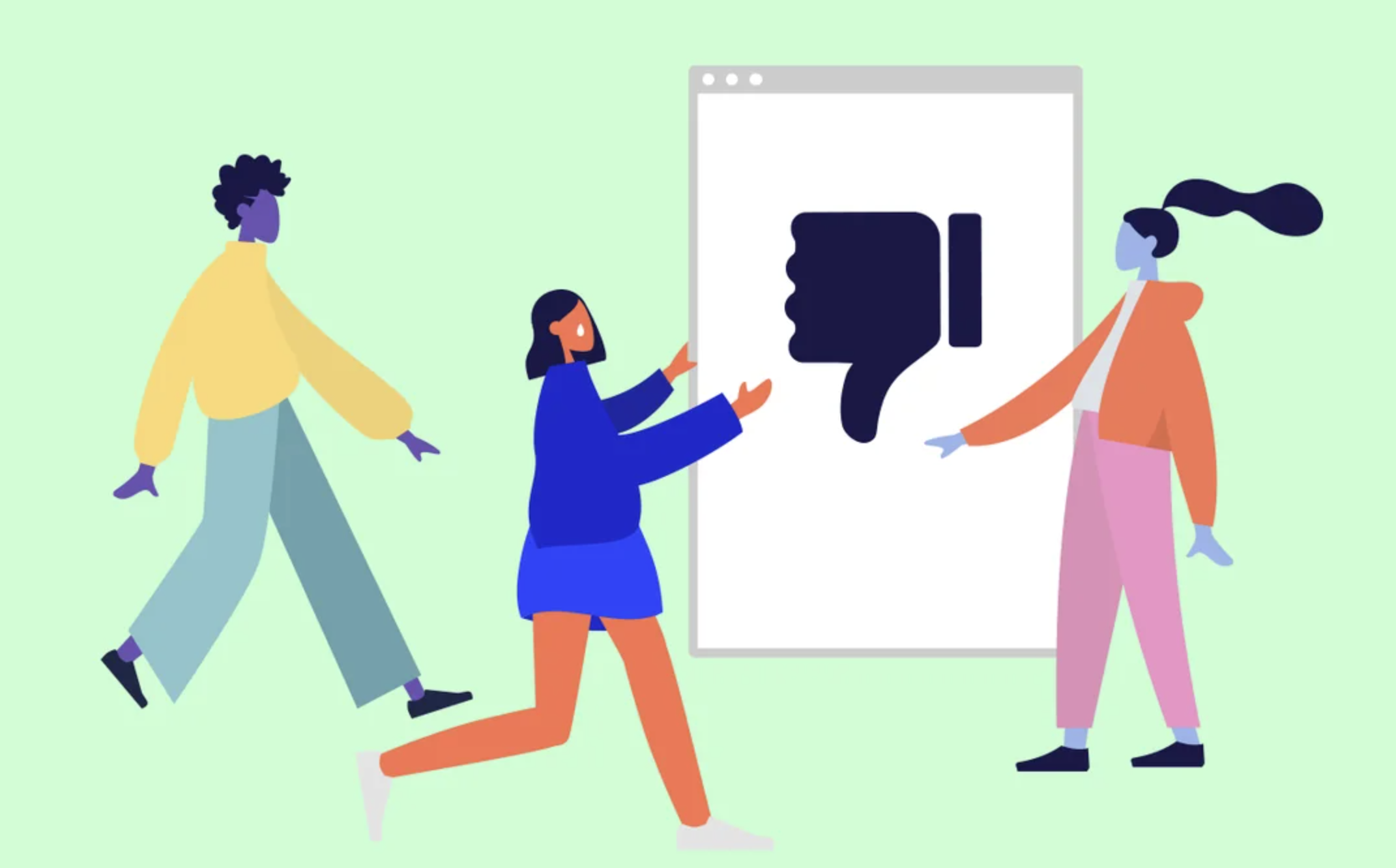
If you had social media or functioning eyes in 2017, you’ll know the exact design I’m talking about. Let me refresh your memory. It’s 2017; Donald Trump has been sworn in as the 45th President, and Kendrick Lamar released his album titled DAMN. Despacito by Daddy Yankee ft. Justin Bieber is looping on the radio. Canada celebrated its 150th birthday. La La Land was mistakenly announced as Best Picture, having to be corrected on live television and awarded to Moonlight.
You open Facebook or maybe Instagram and see they’re advertising their newest feature; the ad is flat and uses simple rounded shapes and solid colours, often off a themed colour palette (muted, naturals, pastels, etc.). The people are cartoon-like, with few individual or distinguishing features, and have exaggerated proportions (long, spaghetti-like arms, round, bulbous feet, heads tiny compared to their torsos). These characters are often doing mundane things such as walking, watering plants, sitting at a desk, or holding a cup of coffee.
The first time you see it, it’s new and breaks through all the noise of content overload. This simple, calming visual has soft edges, matching colours, and added fun from its distorted proportions. It feels incredibly artistic in contrast to what you’re used to seeing: promotional photoshoots, Adobe Illustrator posters, corporate brochures. It feels indie, chic, and cool. You actually pay attention to whatever it is it’s conveying.
But then, a couple of weeks pass, and you see it more and more, and it feels a bit redundant, but tolerable. It’s new and trendy; of course people are going to hop on the bandwagon! But then, it’s months, and you feel everyone has hopped on the bandwagon! It’s everywhere, even in places it doesn’t fit!
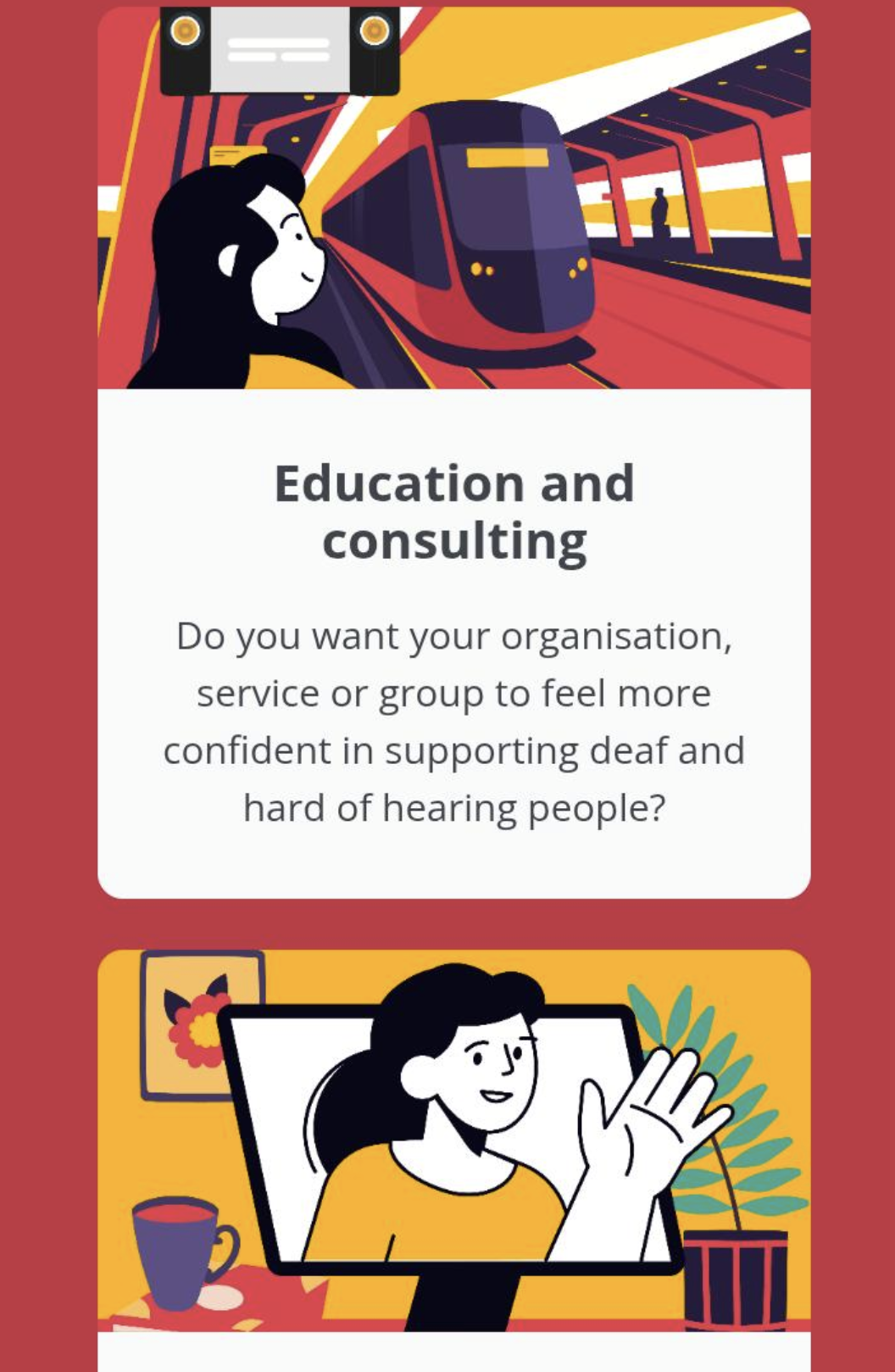
Corporate Memphis used on a website for the deaf.
To this day, Corporate Memphis haunts us. In fact, there’s still a very active Reddit page dedicated to posting where you’ve seen it, just so people can collectively hate on it. Similar to Despacito, society may have overdone it with Corporate Memphis that left many with a lasting distaste for it.
I believe there’s absolutely space for Corporate Memphis. Its easy and calm nature is perfect for therapy-related services/products/subscriptions. Unfortunately, it still holds an automatic negative connotation for some that could hurt the brand. Now, it is not used half as frequently and given how heavily it was used 10 years ago, it now feels outdated. So while it could have its place, I don’t think the world is quite ready to welcome it back into their devices and media consumption.
Now it’s 2026, almost a decade later, and we’re seeing this happen again. Not with Corporate Memphis- no, that has yet to make its return- but with AI-Generated content. Promotional AI content is running rampant; understandably, it’s easy and cheap! However… it often also comes off that way too. The content all has the same look and feel; it lacks a human touch and is so polished it looks fake.
This does not mean that there isn’t a place for AI within content creation or marketing material. What it means is that there still needs to be a human touch. Often, these are the first drafts: you ask AI to generate a photo or post promoting something and the first one it creates is used – perhaps some minor tweaks are added: ‘regenerate with more of the company colours and make it less busy’. However, even with these changes,s it’s still the generic AI template and feel. To get it outside of that,t incredibly detailed descriptions need to be used, but often when AI is used, there is no idea to start with, just the need for something quickly and easily. Using AI for content creation and marketing materials is great when you don’t know where to start. It gives you a visual, and you can pick out what you like and don’t like. You can even ask for a variety of options and, from there, create your own piece with a mix of what was AI-generated that you liked.
In my experience, AI-generated material can feel cold, and it’s given me a starting point, even if I don’t like any of what it generated. Then I know what direction to go in – away from what I was given. Even when I provide a template, something I want it to recreate but enter my own words or photos, it changes what I originally provided, and I end up disappointed that I even bothered taking the time to type my request and wait for its generation.
In marketing, I’m often asked if I’m worried that AI will take my job. Perhaps one day, or for the few corporations that run the world who can afford top-of-the-line AI, it’s a concern. But with how basic so much of its work is, and how lazily it’s being used and applied, I know that a human touch, even just a smidgen, goes a long way and certainly will when everyone is sick of seeing the same AI-generated content.
So while AI is having its heyday now and is a Marketing Muse, just like Corporate Memphis, I believe that in a year, it will become a Marketing Miss as we grow bored of the same regurgitated visuals, templates, and setups.